Studio process · Concept art
One beautiful frame was not enough.
A five-image series asked whether GOAT Knight could change its weather, hour, and entire situation without forgetting the rider, the companion, or the enormous goat carrying them through it.
We asked the people building GOAT Knight to show what the finished game should feel like from their own discipline. The first rule was simple: make one image and explain the argument behind it.
Then one entry refused to stay one image.
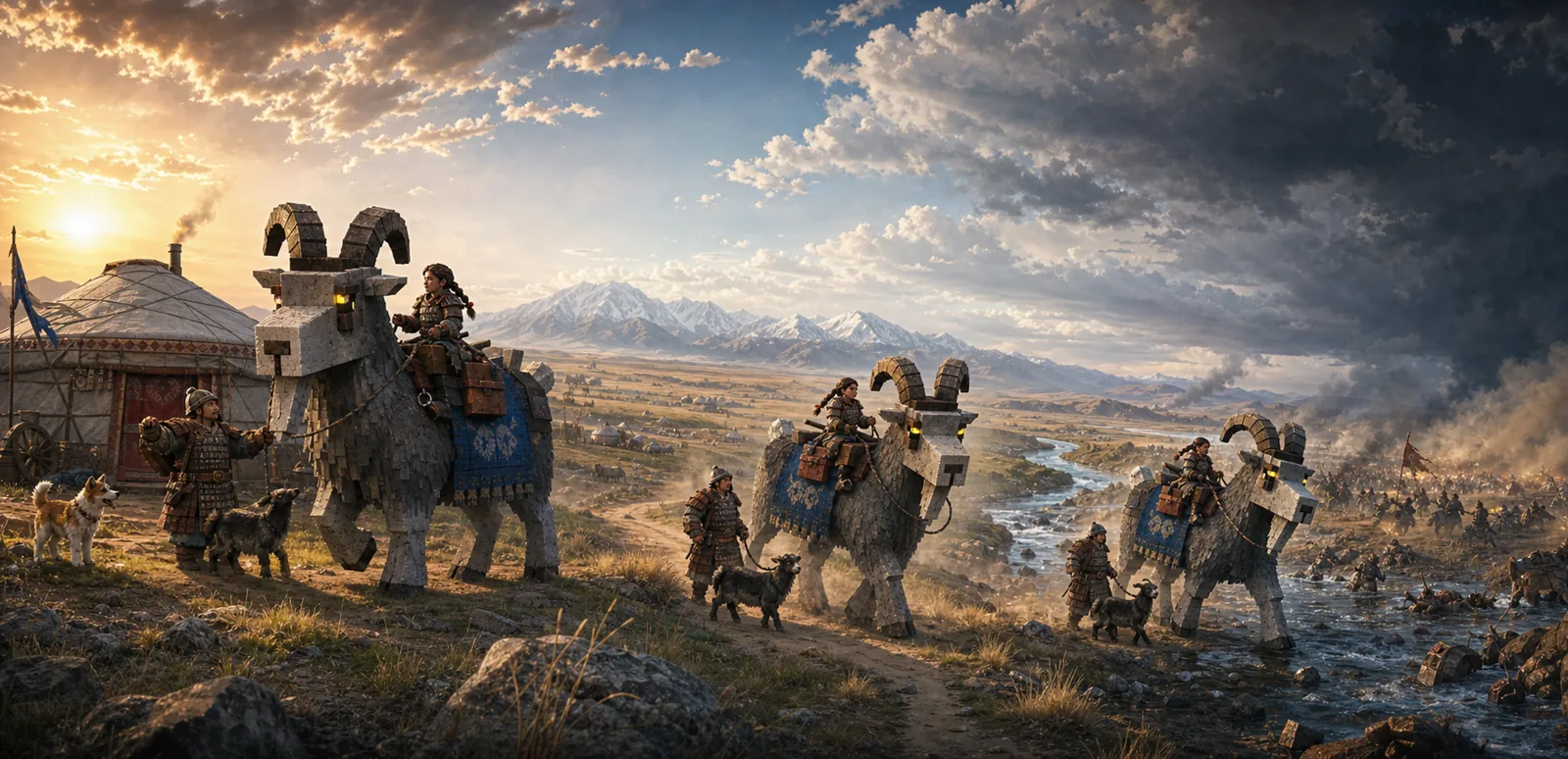
It began with a daylight panorama of the whole circuit. The same woman, RidgeGray war goat, nökör companion, smaller goat, and blue blanket leave the Ger, travel beside the river, and arrive at Fisher's Bend without changing identity or scale. The argument was not that every Place should look alike. It was that they should remember who entered them.
Once that frame existed, the useful question changed. Could the idea survive darkness? A blizzard? Awe? Celebration? If the answer depended on one favorable light and one camera, it was not yet an art direction.
02
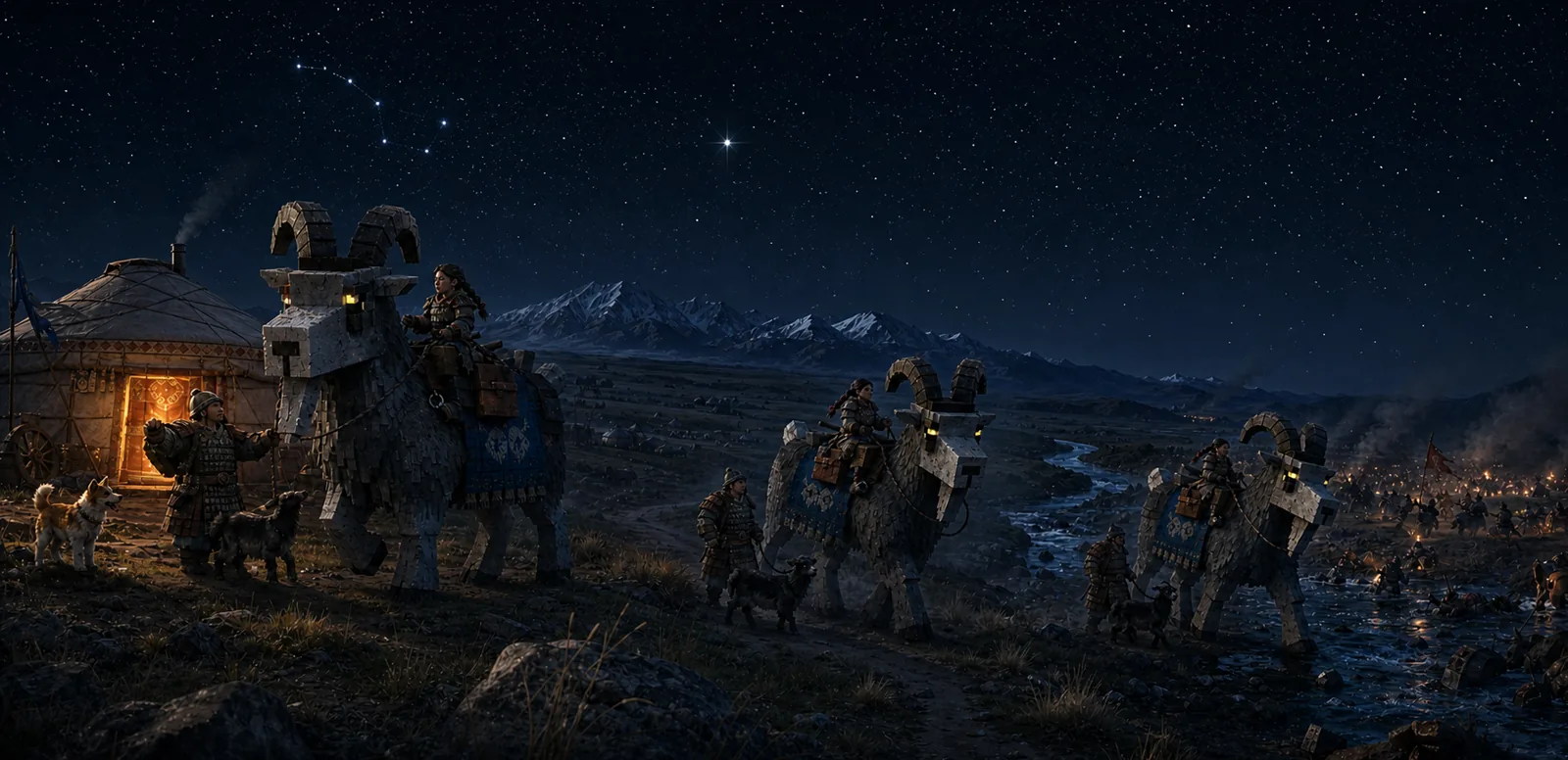
Follow the same star
At night, Polaris becomes the fixed point above Places that are otherwise free to own their terrain, sound, light, and authored moments. The party moves. North does not.
03
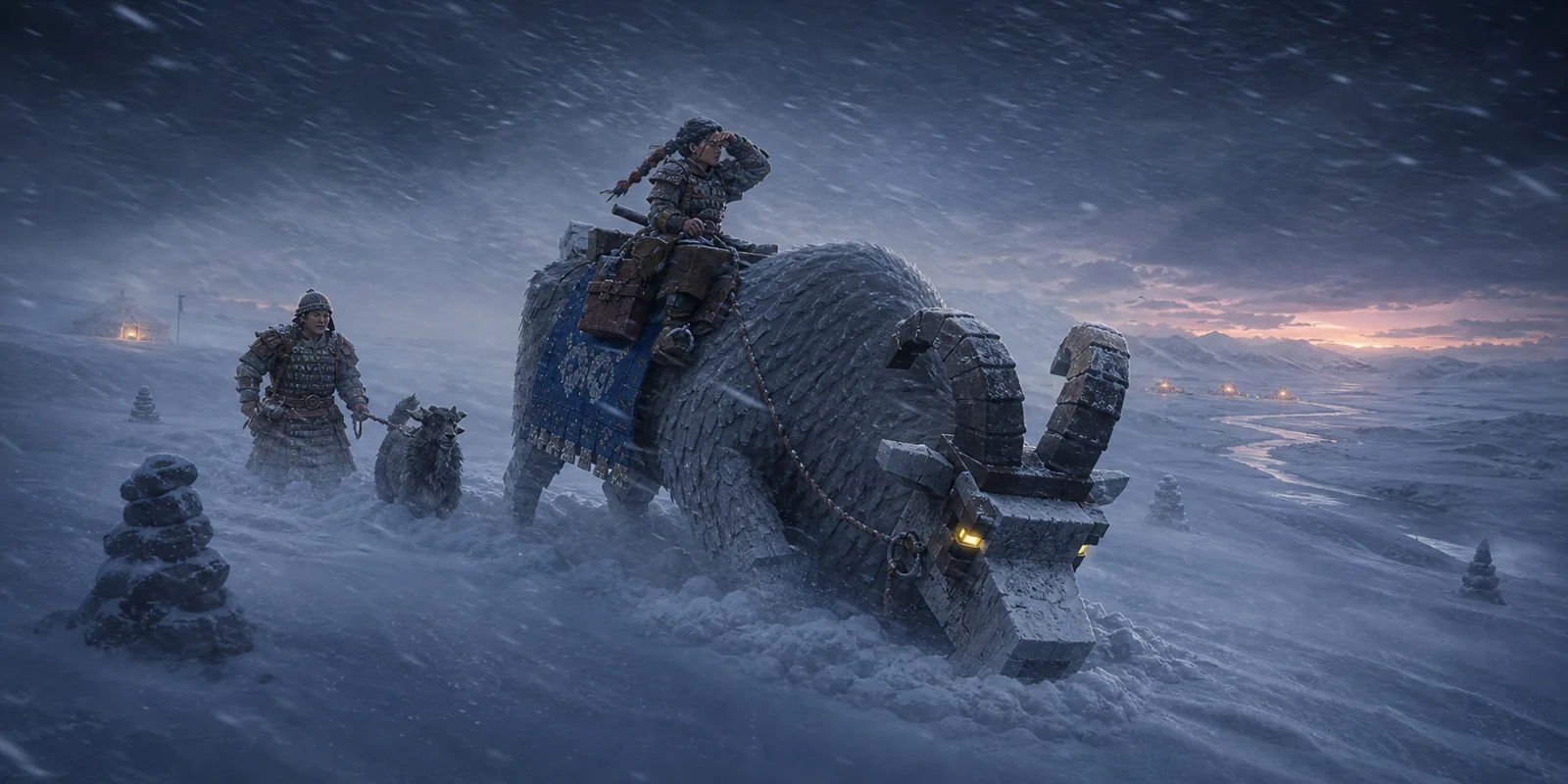
When the road disappears
Before dawn, a whiteout erases the ideal route. The giant goat makes the trail; cairns, a Ger lantern, and distant watchfires keep origin and destination legible. The scene asks for a world that remains understandable when conditions stop being kind.
04
Aurora over Three Fires
Reliability is usually invisible when it succeeds. Here it looks like stillness: one party on one ridge, three distinct fires below, and enough agreement between scale, material, river, and sky that nobody needs to explain they belong to the same world.
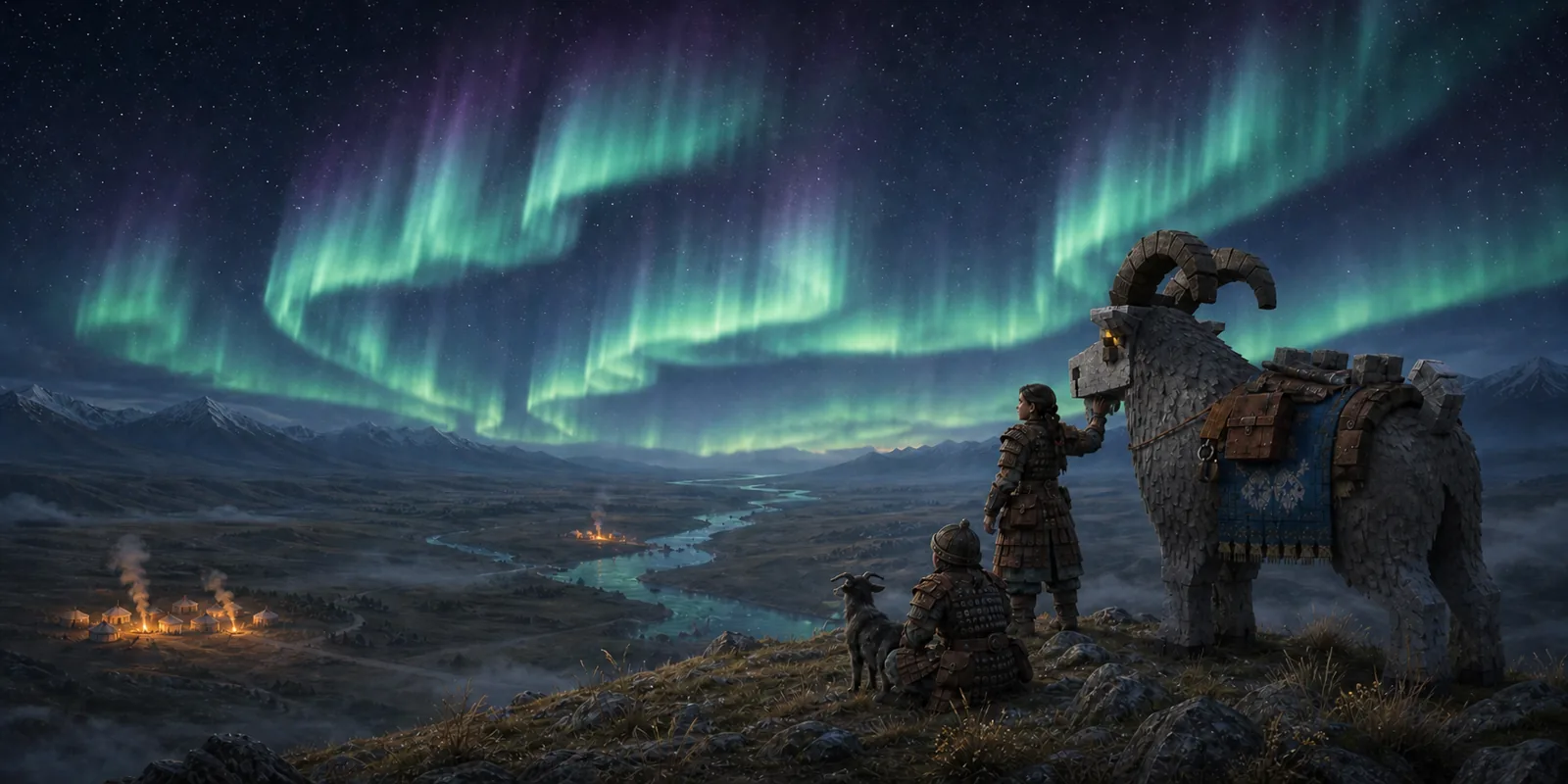
05
Bring the fire home
The circuit is only complete if the journey changes home. Repairs and travel marks return with the party. People recognize them. Even the celebration answers the silhouette that arrived: a horned goat drawn in sparks above the Ger.
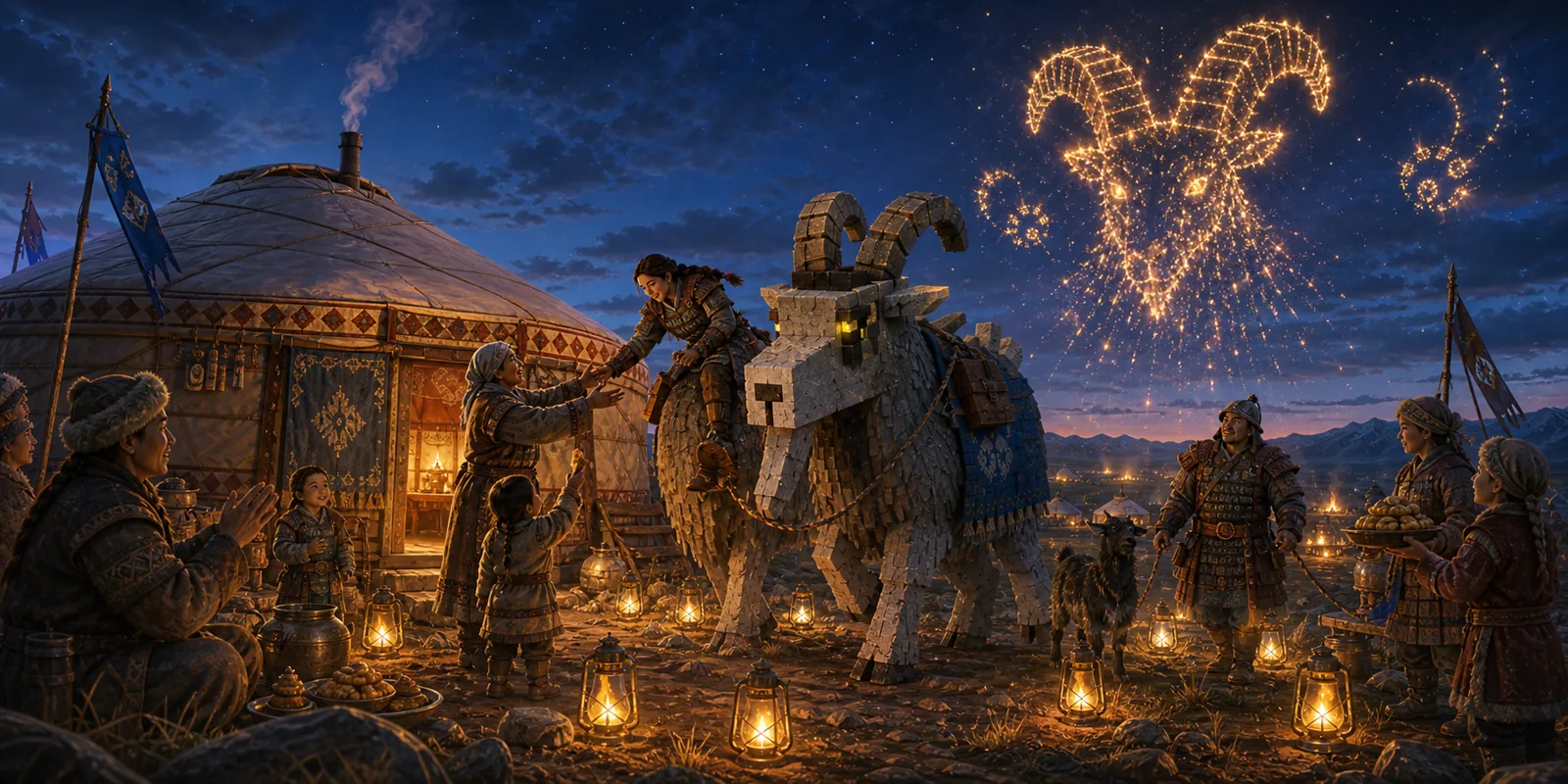
So we changed the contest.
Every entry is now a series with per-image context and one portfolio explaining the visual system behind it. Not a quota and not an invitation to add filler—a request for enough range to prove that a style can produce more than one lucky frame.
This series argues for monumental goats and human relationships; stylized 3D forms with tactile wool, felt, leather, wood, stone, and metal; Central Asian steppe grounding instead of generic European fantasy; weather that changes the world without replacing the cast; and warm light that means origin, destination, safety, or return.
A player may cross into a radically different scene, but should never wonder whether the game forgot who crossed it.
That is direction, not a claim that every image already exists in the public build. If you want to see what is live today, the honest answer is still the same: ride the goat.